Applied System
Conversation Design Library
Overiew
I started with a full conversational audit across every bot intent to understand what was already in place. Once the flows were mapped side by side, the structural gaps were clear. Navigation cues shifted across intents, content framing changed from flow to flow, and recovery paths weren’t consistent. The experience depended on which branch a user entered instead of a shared conversational architecture.
I broke the audit into interaction types, intent purposes, and key decision moments. That surfaced the recurring patterns: how we introduced articles, how we shaped the “anything else” moment, where users needed orientation, which flows created dead ends, and how multi-topic menus needed to support returning to earlier branches without losing context.
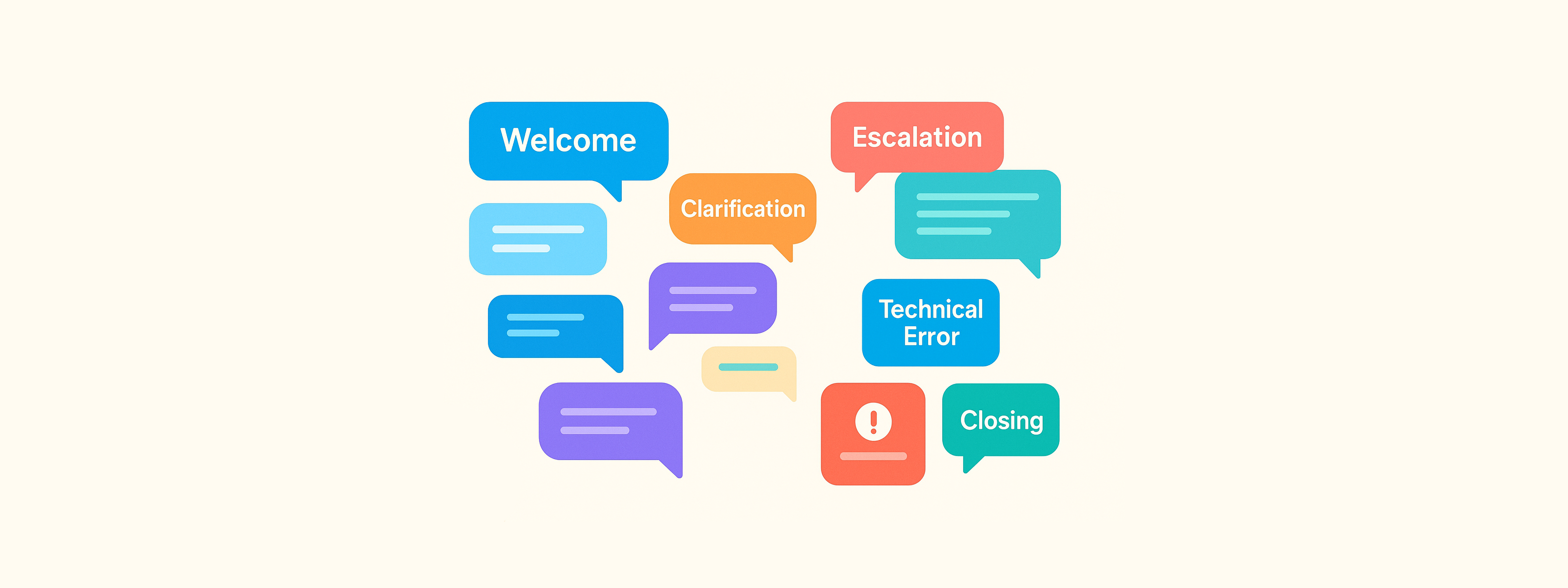
From those findings, I built a repeatable language pattern library for the CXD team. It codified phrasing structures, interaction logic, and recovery behaviors that held up across flows. The library removed guesswork, stabilized quality, and made the bot more coherent as it scaled.
Purpose
Create a shared conversational foundation so every designer builds from the same logic instead of rewriting patterns flow by flow.
System Architecture
1. Inputs
- Full intent inventory
- Flow structures
- Tone and phrasing variations
- Navigation and recovery paths
2. Pattern Extraction
- Article introduction patterns
- Loop-closure phrasing
- Multi-branch exploration logic
- Required back-navigation moments
- User orientation cues
3. Library Output
- Standardized phrasing
- Interaction templates
- Reusable navigation structures
- Decision patterns for branching flows
Patterns Identified
- Users rely on predictable orientation markers
- Drift happens most often at transitions
- Multi-topic flows require recoverability by design
- Conversational trust hinges on consistent closure logic
- Designers were solving the same problems independently
Impact
- Reduced conversational drift across intents
- Increased design speed with reusable structures
- More predictable navigation for customers
- A coherent bot experience that held together as new features shipped
Applied System
Conversation Design Library
Overiew
I started with a full conversational audit across every bot intent to understand what was already in place. Once the flows were mapped side by side, the structural gaps were clear. Navigation cues shifted across intents, content framing changed from flow to flow, and recovery paths weren’t consistent. The experience depended on which branch a user entered instead of a shared conversational architecture.
I broke the audit into interaction types, intent purposes, and key decision moments. That surfaced the recurring patterns: how we introduced articles, how we shaped the “anything else” moment, where users needed orientation, which flows created dead ends, and how multi-topic menus needed to support returning to earlier branches without losing context.
From those findings, I built a repeatable language pattern library for the CXD team. It codified phrasing structures, interaction logic, and recovery behaviors that held up across flows. The library removed guesswork, stabilized quality, and made the bot more coherent as it scaled.
Purpose
Create a shared conversational foundation so every designer builds from the same logic instead of rewriting patterns flow by flow.
System Architecture
1. Inputs
- Full intent inventory
- Flow structures
- Tone and phrasing variations
- Navigation and recovery paths
2. Pattern Extraction
- Article introduction patterns
- Loop-closure phrasing
- Multi-branch exploration logic
- Required back-navigation moments
- User orientation cues
3. Library Output
- Standardized phrasing
- Interaction templates
- Reusable navigation structures
- Decision patterns for branching flows
Patterns Identified
- Users rely on predictable orientation markers
- Drift happens most often at transitions
- Multi-topic flows require recoverability by design
- Conversational trust hinges on consistent closure logic
- Designers were solving the same problems independently
Impact
- Reduced conversational drift across intents
- Increased design speed with reusable structures
- More predictable navigation for customers
- A coherent bot experience that held together as new features shipped
Applied System
Conversation Design Library
Overiew
I started with a full conversational audit across every bot intent to understand what was already in place. Once the flows were mapped side by side, the structural gaps were clear. Navigation cues shifted across intents, content framing changed from flow to flow, and recovery paths weren’t consistent. The experience depended on which branch a user entered instead of a shared conversational architecture.
I broke the audit into interaction types, intent purposes, and key decision moments. That surfaced the recurring patterns: how we introduced articles, how we shaped the “anything else” moment, where users needed orientation, which flows created dead ends, and how multi-topic menus needed to support returning to earlier branches without losing context.
From those findings, I built a repeatable language pattern library for the CXD team. It codified phrasing structures, interaction logic, and recovery behaviors that held up across flows. The library removed guesswork, stabilized quality, and made the bot more coherent as it scaled.
Purpose
Create a shared conversational foundation so every designer builds from the same logic instead of rewriting patterns flow by flow.
System Architecture
1. Inputs
- Full intent inventory
- Flow structures
- Tone and phrasing variations
- Navigation and recovery paths
2. Pattern Extraction
- Article introduction patterns
- Loop-closure phrasing
- Multi-branch exploration logic
- Required back-navigation moments
- User orientation cues
3. Library Output
- Standardized phrasing
- Interaction templates
- Reusable navigation structures
- Decision patterns for branching flows
Patterns Identified
- Users rely on predictable orientation markers
- Drift happens most often at transitions
- Multi-topic flows require recoverability by design
- Conversational trust hinges on consistent closure logic
- Designers were solving the same problems independently
Impact
- Reduced conversational drift across intents
- Increased design speed with reusable structures
- More predictable navigation for customers
- A coherent bot experience that held together as new features shipped